Monday, February 8, 2016

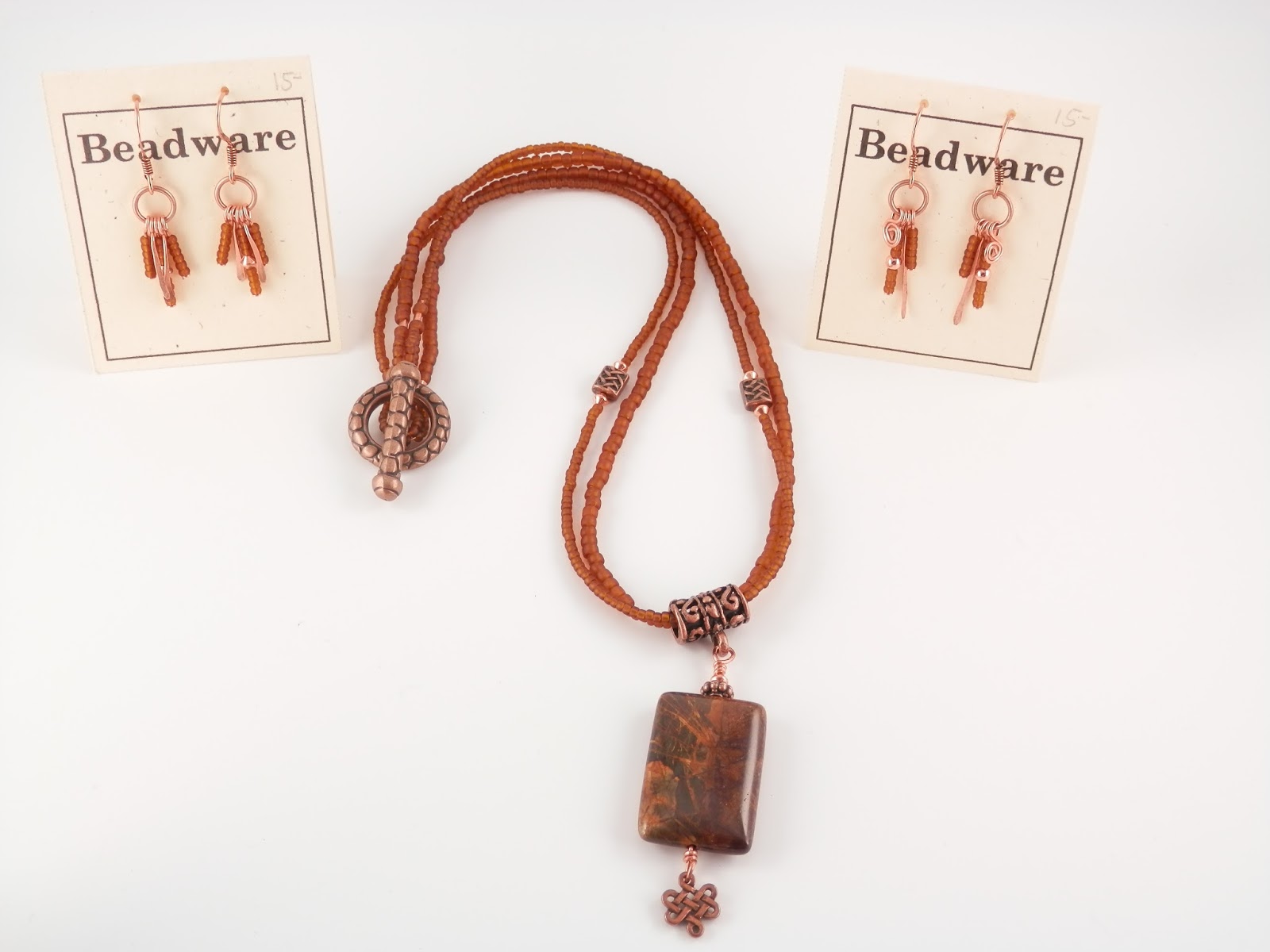
Recent Work - Labradorite


Labradorite is a stone of magic, power and good luck.We can all use one or two of those in our lives!


This beautiful stone is found in Canada (Labrador, Newfoundland), Australia, Madagascar, Mexico, Norway, Russia and the USA.

Healing Ability: Helps develop the hands' sensitivity, making it useful for physiotherapists and all who use the power of touch to heal. Helpful in treating eye and brain disorders, and to helps regulate metabolism and the digestive process. effective in alleviating bone issues, disorders of the spinal column and the wear and tear of the joints. Rheumatism and arthritis may also benefit from this stone's healing powers.


Mystical Ability: Excellent for awakening one's own awareness of inner spirit, intuition and psychic abilities. Tempers the negative side of our personality, the traits and actions that rob our energy and may produce depression or shame. Allows you to see through illusions and determine the actual form of your dreams and goals. Stimulates enthusiasm and imagination.


According to an Eskimo legend, the Northern Lights were once imprisoned in the rocks along the coast of Labrador. It is told that a wandering Eskimo warrior found them and was able to free most of the lights with a mighty blow of his spear. Some of the lights were still trapped within the stone, labradorite.


Note: As always stone trivia is provided for curiosity only and is in no way meant to be medical advice.

Sunday, January 24, 2016

Business of Art - Production Work

When you are doing your art as a way to make a living, production work is a necessary task. Early on, everything I made was one of a kind. But at some point you reach a level of sales where that is just not possible anymore. For me that was a number of years ago.

Simply defined, production work is making multiples of the same thing. Usually the copies are exactly the same, but often I just can not help myself from making at least one change on each item. The advantage of production work is that it is an efficient use of time. I can lay out components and then create multiples of the same or similar item completing one step on all items at a time.

In this example I am making multiple pairs of hammered earrings at once. I gather materials and lay them out. I add beads to copper headpins. In this case I am making slight variations so that each pair is unique.

Next I cut and bend the wires on all of the beaded components and layout the wire to create the hand hammered daggers and coil dangles. I hammer all the daggers at once and then create all of the coils. Another efficiency step is that the daggers and coils are usually created from the tops of the headpins I have cut from the beaded components. No waste!

When all the components are ready I create the earrings paying attention to the order of the dangles so that each half of a pair is a mirror image of the other. 

The last step is to prepare the earring cards and hang the earrings on their cards.. I create and print my own cards. I cut them using a paper cutter, punch holes for the ear wires and fold them. Again, this is a type of production work. Each card is priced and a description of the materials used is added. The finished earrings are counted and added to inventory and then set near my light box for photography.

Production work is good for popular items and for items that are similar in design. But do not fear, every piece I make is still given thought and care in its creation.


Monday, January 18, 2016

Business of Art - Numbers

 Another post in my series about the business side of an art business. Many assume when an artist is not doing shows they must have plenty of free time. If you are doing your art as a way to make a living then that is not the case. For me January is all about numbers!


My first task in January is to bring all of my bookkeeping up to date for the previous year and make blank ones for the new year. There are many methods you can use to keep track of things. There are off the shelf accounting programs like Quickbooks and Quicken, and programs specifically designed to track an artists inventory. When I started my business in 2001 I set up a series of worksheets in Excel and I have continued to expand on these over the years. My accountant says they are fine and no reason to change.

My spreadsheet system consists of 5 worksheets that interact with each other:
  • Summary - Tracks income by type (instate, outstate, wholesale, consignment, shipping & handling), income and taxes by location (each city in WA has a different tax rate/code), overall monthly income/expenses and profit/loss.
  • Inventory - each items cost (time, overhead, materials), price, # made, # sold, # instock
  • Costs - monthly expenses, donations, theft, damage
  • COGS - cost of good sold per month. Uses materials costs and number of each item sold. 
  • Booth Sales - Tracks each show I do with what sold, # days, # hours, # sales and expenses. These numbers are used to calculate sales/items/$/cost/profit per hour.  I use these figures to rank the shows I do and drop out the bottom ones each year. 

I  collect all my data (go through credit card statements, checkbook registers, receipt files, etc) and populate any data that is missing. I should note here that during the year every Monday is book keeping day. That way this is not such a horrendous task. I also check the formulas in the worksheets.

My next task is inventory. I count all the items made. I am usually pretty close to what was recorded in my spreadsheet. Earrings are the place I can be off a few. Now I am ready to do local, state and federal taxes. Yippy skippy!

In January I also inventory my display items, make list of things to clean, repair or touch up  (stands, tent frame and walls, tables, shelves, table cloths, shutters, banners). And I take stock of supplies I need to reorder (bags, tissue paper, tape, ink, biz cards). I also make a list of items to make and the things I will need to make them.

Whew, tired yet? The month is not over. I also need to plan my shows for the year and get show applications out. I need to keep up with my business Facebook page, newsletter and blog, learn new skills and start making things. Being self employed is hard work. but I love it!!! Thanks to all my customers, friends and supporters who have made this dream a reality.


Saturday, January 16, 2016

Metal Earwire Sensitivity

Photo by Rena Klingenberg


This morning I had an excellent question in my inbox from Rachel asking about cooper ear wires and metal sensitivity. I have tried to pick through the wide variety of information on the internet to come up with the information below. Ultimately there are no definitive answers as your sensitivity can depend on so many factors including your age (hormones), the weather (hot?), and how the item was made. As with many things, there are exceptions to every rule!!


Here are some basics on metal allergies:
*Nickel is the big culprit in metal allergies. Avoid it. It’s the most common metal allergy, and occurs in approximately 10% of the population. Base metal, iron, goldplated, gold & surgical steel contain nickel.

* Surgical steel which is touted for those with allergies can occasionally contain trace amounts of nickle.

*Aluminum is good for most people, but not often used.

*Copper is a pure metal — it does not contain any other metals. Is is fairly inert and allergies to it are rare, but there are folks who react to it. If you are able to wear sterling silver, it is likely you will be fine with copper. Will copper turn your skin green? It is possible if you wear it very long term. But to wear a pair of earrings for a day? No. Fun fact: Copper is antimicrobial & 100% recyclable.

*  Brass is an alloy of copper & zinc. It is good for most people, but there are folks who react to it.

* High-carat gold (over 14kt) does contain trace amounts of nickle, but usually not enough to cause sensitivities. Rose gold contains a higher percentage of copper and white gold has the highest concentration of nickel

* In Gold-filled (GF) jewelry the gold is permanently bonded to the base metal. It has an approximately 50-100x thicker coating of gold than gold-plated jewelry, so it can be worn longer. Gold-fill pieces do contain trace amounts of nickel, and may need to be avoided for those with extreme sensitivity.

* Silver or gold plated are made of a base metal (usually copper, but sometimes iron, nickel or zinc), which then undergoes a process called “electroplating” to coat the surface of the metal with a thin plating of metal (either sterling silver or 14kt gold). Jewelry finished in this way is generally not ideal for long-term wear, as the plating can wear off over time. For those with metal sensitivities, this means that once the plating begins to wear, the underlying metal will be exposed and can cause irritation. 

*Fine (995) silver is good for most people, but there are folks who react to it.

* Sterling silver is 92.5% silver and 7.5% copper. It can have a trace amount of nickle. It is good for most people. Sterling silver can leave black marks on your skin due to a reaction with the copper content & the tarnishing of the jewelry. To avoid this, remove jewelry when showering and dry completely before wearing.
 
 *Pure niobium or grade 23 titanium are good bets for very sensitive ears. They are expensive and you do not see them used very often. (I do have anodized niobium earwires in blue, green, fushcia and grey that I can substitute on request.)


Tips for reducing sensitivities:
* Avoid wearing the offending metals for extended periods of time.
* Do not get jewelry wet: Moisture trapped between the metal and your skin can increase your chances of sensitivity.
*Avoid base metals when you’re perspiring: nickel breaks down quickly in the presence of sweat (salt), and can cause your skin to flare up — this is why many people find metal allergies “worsen” in the summer months.

As we age our reactions to metals change (thank you hormones!) If you have a pair you love and you start reacting to them, an occasional coat of clear nail polish on the earwire should help.

**Information for this article was collected from various sources including Rena Klingenberg's Jewelry Making Journal and The Art of Brilliance Found Jewelry.


Tuesday, January 5, 2016

New Year, New Directions, New Skills

Tacoma Metal Arts CenterBesides being a month for inventory and bookkeeping, January has become a month for learning. I kicked off the new year with a intensive metalsmithing weekend at Tacoma Metal Arts Center in Tacoma. Three full days of sawing, filing, stamping, hammering, texturing, bezel setting stones, making rings, chain fabrication and lots of soldering. What fun! I hope to have time in the next several months to create some new designs incorporating what I learned.

Amy Reeves, the owner and our instructor is a tool junkie and we had quite the array of hand and power tools to experiment on. The Center is a cozy spot, well laid out with separate stations for each type of work.

Day one had us sawing and filing. The class was small so there was plenty of individual instruction.  I was not too bad at this. Slow and steady, a gentle grip and patience were key. I selected a leaf pattern and got down to business. I was so focused I did not take too many pictures of the work in process. I also began a cuff bracelet that went through many changes as the weekend wore on. My goals were to try and incorporate as many techniques as possible, rather than work on a specific design or outcome. Below is what I had at the end of day 1.


Day two was focused on rings and bezel setting a stone, new techniques to me. I had no idea how much work goes into such a ring!  For fun I chose to work with a small beach stone I had brought along. We each had our own jewelers bench to work on. I just may have to get me one of these. I was also lucky that many of the tools I needed were stored just behind me within easy reach. Love the pull out for hammers!


At the end of day two I had a ring, bezel and my stone. Because my stone was not symmetrical I marked it with a piece of tape so I knew the top and which direction it went into the bezel.


Day three we needed to finish up all of our projects. First up was finishing the ring and setting the stone. My word that took a lot of polishing! So many little wheels and compounds. Here are my finished projects. I do not usually wear rings so I was surprised how comfortable it is. The copper leaf pendant has a small brass nest filled with 3 sterling eggs. I may add some patina to the leaf.


The bracelet has a story. The lower portion represents the edge of the ocean, the brass wire is the edge of the water. The indented wave is the mark left on the sand by water as the tide goes out. The texture on the top is the beach and then I added a beach pebble. The setting for the pebble needs to be redone as I have an idea for a better way to do it so the prongs are even. And the I need to soften the edges as they are a bit sharp.

Check out the TMAC website for a list of their classes. There are classes for all skill levels, one day, multi-day. I will definitely be taking more. They also sell a variety of tools and supplies. You can see examples of the work of other students on their Facebook page. Below are some pictures of the other students work from my class.


Sunday, November 15, 2015

Red Creek Jasper

This jasper is mined in China. It is also known by the names of Cherry Creek or Picasso Jasper. 
Metaphysically it is believed to bring balance and relaxation and, like all jaspers, it is a stone of protection and grounding. 

This one has sold.

As a healing stone, red creek jasper helps with sense of smell and promotes physical energy.

 Mystically it helps to bring balance to your life and aids in relaxation, 
as well as eases emotional stresses. 


 This stone is thought to be lucky for actors.  
It gives one the courage to speak out and be independent.
  

As always, this information is provided for curiosity only and is not meant to be medical advice. 
 

Wednesday, October 28, 2015

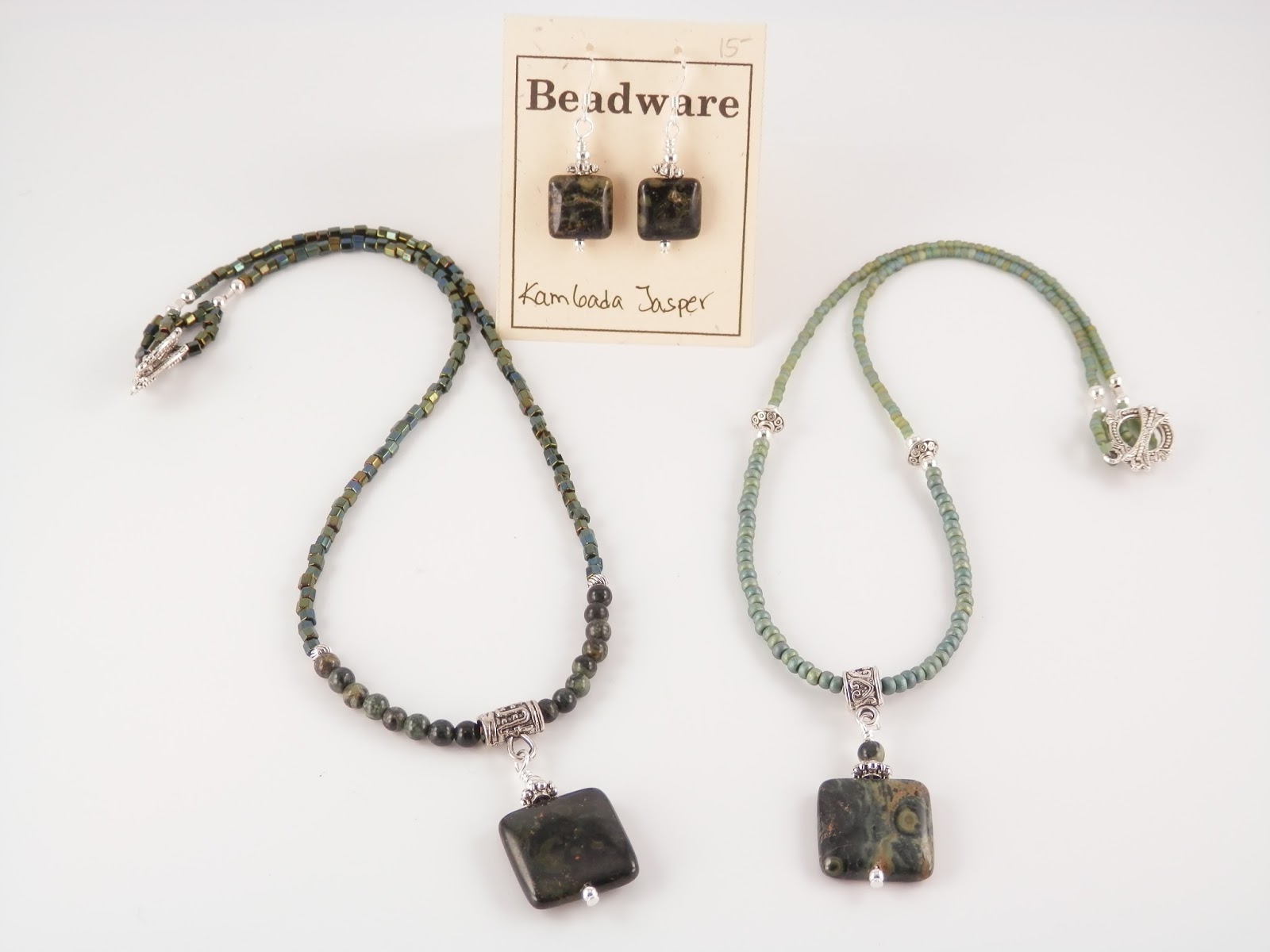
Kambaba Jasper

The one on the left has sold.

This is such a cool stone! Kambaba Jasper (also called crocodile jasper) is a rare fossilized jasper from Madagascar. It is a stromatolite jasper, which means that it is composed of fossilized algae. Stromatolites, colonial structures created by cyanobacteria (commonly called blue-green algae) are among the oldest fossils on earth, being found in rocks over 3 billion years old. Once the dominant life form on the planet, Stromatolites are now found in only a few places, such as Madagascar. Cyanobacteria form these mound-like structures by growing through sediment, binding the particles together resulting in successive layers which, over very long time periods, may harden to form rocks. These structures may be from fractions of an inch to several feet in diameter. 

Both are sold

Cyanobacteria were likely responsible for the creation of earth's oxygen atmosphere. They were the dominant life form on Earth for over 2 billion years. Today they are nearly extinct, living a precarious existence in only a few localities worldwide. Fossil stromatolites constitute our earliest and most pervasive record of life on Earth. Although many stromatolites are fossils, there are a number of locations on the modern-day Earth where Stromatolites are still forming.


This stone calms emotions and brings balance and relaxation, and like all jaspers, it is a stone of protection and grounding. It promotes rational thinking and teaches the wearer to have empathy with the feelings of others. It aids in the ability to deal with difficult situations and helps turn thoughts into actions. It also works on stimulating creativity whilst encouraging self discipline to complete endeavors or projects which have lost their original excitement. In a healing capacity it aids the circulation and digestion and detoxifies the blood.
Both are sold

Sunday, October 18, 2015

Tempest Stone – Stone of Change


Pietersite is not only beautiful by very powerful. It is found in Henan Province, China, and Namibia, South Africa. It is a variety of Quartz, composed naturally of Tiger's Eye, Hawk's Eye and Jasper, and is characterized by an incredible chatoyancy (cat's eye effect or optical reflectance effect) and brilliance of life within the stone. The most common Pietersite is gold but it is also rarely seen in red and even rarer is blue. 

Its highly charged energy is almost tangible. Just as lightning clears the air and makes all things new, Pietersite discharges negative energies and emotional turmoil, and cleanses the aura, restoring it to calm.


Pietersite is a powerful protection stone, especially against the elements. It calms nervous people and animals during storms, protects when driving in bad weather, and guards homes and businesses against storm damage. It also acts as a shield against the adverse effects of technology, particularly if you work long hours with a computer or live near a mobile phone mast

Healing ability: Stimulates the physical body, providing energy and strength, and is a nervous-system stone, useful for stimulating and strengthening the nerves and brain. It eases headaches, nervous diseases, breathing difficulties, stomach pain and dizziness. It also stimulates the pituitary gland, balancing the endocrine system and the production of hormones governing metabolism, blood pressure, growth, sex, and body temperature. Thought to ease eye infections, Pietersite is also reported by some users to improve long-distance focus and night vision


Mystical power: Helps us to weather rough and stormy periods of our life and to build new order out of chaos. Aligns energy centers while providing grounding. Dispels illusion and assisting in recognition of the beauty of the soul. Promotes loyalty to self and to the ultimate experience of life. Allows one to see beyond the horizon, helping to support human courage, tenacity, and dauntless effort to both create and maintain beauty. oosts self-esteem when worn consistently. It is especially empowering for creative people who lack confidence in their abilities.

An important tool in bringing pent-up, internalized feelings and conflicts to the surface, allowing the unsaid and unexamined to erupt in an emotional outpouring that not only clears the air, but begins the process of healing. An excellent ally for those who are stuck or unable to make progress. Helps to clear stagnant energies, habits and life patterns, and reveals new directions for one's life. It also lends the will to take action toward those new goals. It brings one to the source of their own inner guidance, and assists one in recognizing the truth or falsehood of others' words or actions. It promotes speaking out and exploring anything that may hinder access to one's own truth.


** This information is provided for curiosity only and is in no way meant to be medical advice.


Saturday, October 17, 2015

Recent Work - Flower Jade

Sold

 Flower Jade is a type of Jadeite. The variety of Jade known as Jadeite comes in a variety of colors including red, orange, yellow, green, blue, lilac, pink, black, white, and brown. 


Historically, Jadeite has been treasured in China as the royal gemstone, Yu, for 5,000 years. Mined in Japan, Myanmar, Guatemala and USA.  


Flower jade is thought to enhance confidence and self-assuredness.


 It helps one gain knowledge from dreams, and assists in getting in touch with one’s spiritual side. 

(Note: Stone trivia is provided for curiosity only.)

Monday, October 12, 2015

Stocking Up - Stone Pendants

My goodness I can not believe how long it has been since I did a blog post. Time to make up for that! I have started to rebuild my stock after the summer season so that I will have plenty to choose from for the reminder of my shows this year. Two new items this year that have been hot sellers are stone pendants and double drilled stone earrings.

Stone pendants came about after last winter when I had several folks ask if they could purchase the pendant off of an existing necklace. Unfortunately for these customers I design my necklaces in such a way that the pendant is an integral part of the necklace and not removable. So I experimented with making pendants on their own.

I have a small selection of silver plated chain or leather cord that I can provide, but most folks have necklaces of their own to hang these beauties from. The perfect solution if you do not want to invest in a whole necklace or want the option of varying the length. I try to select stones that have a lot of character and will really stand out.

Here are some recent examples:

 Turritella agate and freshwater pearl with pewter
  Turritella agate and freshwater pearl with copper
 Feldspar, two with smokey topaz, and pewter or gold plated brass
 Pietersite with agate and copper
 Chocolate jasper with copper
Green opal with copper or red creek jasper with pewter